Every Trade. One Day. And the One Thing Most Trade Businesses Overlook: Their Technology
Join Proactive Risk in Denville for Trades Thursday on October 1, 2026, and learn practical ways to protect the technology, crews, and customer trust behind your trade business.
By Tom Brennan

If you run a plumbing, electrical, HVAC, landscaping, remodeling, construction, or other service business, your competitive advantage is still built on skilled people, reliable work, and strong customer relationships.
But the tools behind that work have changed.
Your schedule may live in the cloud. Invoices may be sent from a phone. Payments may move through an online portal. Crews may carry tablets with customer records, job photos, and access instructions.
That technology helps you move faster and protect margins. It can also create risk that is easy to overlook when you are managing trucks, crews, customers, callbacks, and cash flow.
That is one reason Proactive Risk is bringing trade professionals together for Trades Thursday – Local Event: Proactive Risk's Denville Trades Gathering.
Thursday, October 1, 2026, 7:00 PM – 10:00 PM EDT
Diamond Spring Brewery, 50 Broadway, Denville, NJ 07834
The event is hosted by Tom Brennan, Founder & CEO of Proactive Risk. Tom is a recognized cybersecurity community leader in New Jersey: a veteran, entrepreneur, mentor, and industry advocate who brings business and technology professionals together through education, networking, mentorship, and workforce development that strengthens the cybersecurity community and local business ecosystem.
The event is free to attend, in person, and space is limited. RSVP for the Denville Trades Thursday gathering.
Trades Thursday is Housecall Pro's inaugural national day for home service professionals, activating simultaneously in 18 Regional Hub cities and 300+ local gatherings across North America. The Denville gathering is being hosted by Proactive Risk and listed on Housecall Pro's event platform.
The themes are simple: connect, learn, grow, and celebrate. No agenda, no pressure. Just the trades showing up for each other.
What Changed in the Trades
Trade businesses increasingly run on software:
- Scheduling and dispatch
- Invoicing and payments
- VoIP and mobile phones
- GPS fleet tracking
- Customer relationship and marketing tools
- Supplier and dealer portals
- Smart and sensor-enabled equipment
That is good technology when it is selected and managed properly. It can mean faster invoicing, fewer missed calls, better scheduling, and better margins.
The trade business that once protected a locked office may now have dozens of connected doors into its operations.
Crews carry phones and tablets into the field. Those devices may provide access to customer names, addresses, payment information, job photos, estimates, contracts, door codes, or alarm details.
The question is not whether technology belongs in the business. It does.
The question is whether the business has treated that technology like a set of valuable tools: tools that need the right owners, maintenance, access controls, and backup plan.
The Risks That Actually Hit Trade Businesses
1. Business email compromise and payment fraud
A criminal may spoof or hijack an email account and send a changed bank account for a supplier, subcontractor, or customer payment.
Another common tactic is the fake customer who overpays and asks for a refund through a different method.
One bad wire or payment can erase a season's margin. Treat payment changes like a change to a gas line: stop, verify, and do not rely on appearances.
2. Ransomware and locked files
Estimates, job files, customer lists, accounting records, and payroll information can become unavailable after a ransomware attack or other system failure.
If backups are not real and testable, the business may be forced to negotiate, rebuild, or operate without information it needs every day.
A backup you have never restored is a guess.
3. Customer data and payment obligations
Trade businesses often hold names, addresses, phone numbers, payment details, job photos, and access instructions.
Door codes, alarm codes, and home access details deserve special care. Customers trust a service provider to handle that information responsibly.
That information is not just another line in a customer record. It is personal information with real business, contractual, and legal obligations.
4. Field-device and access risk
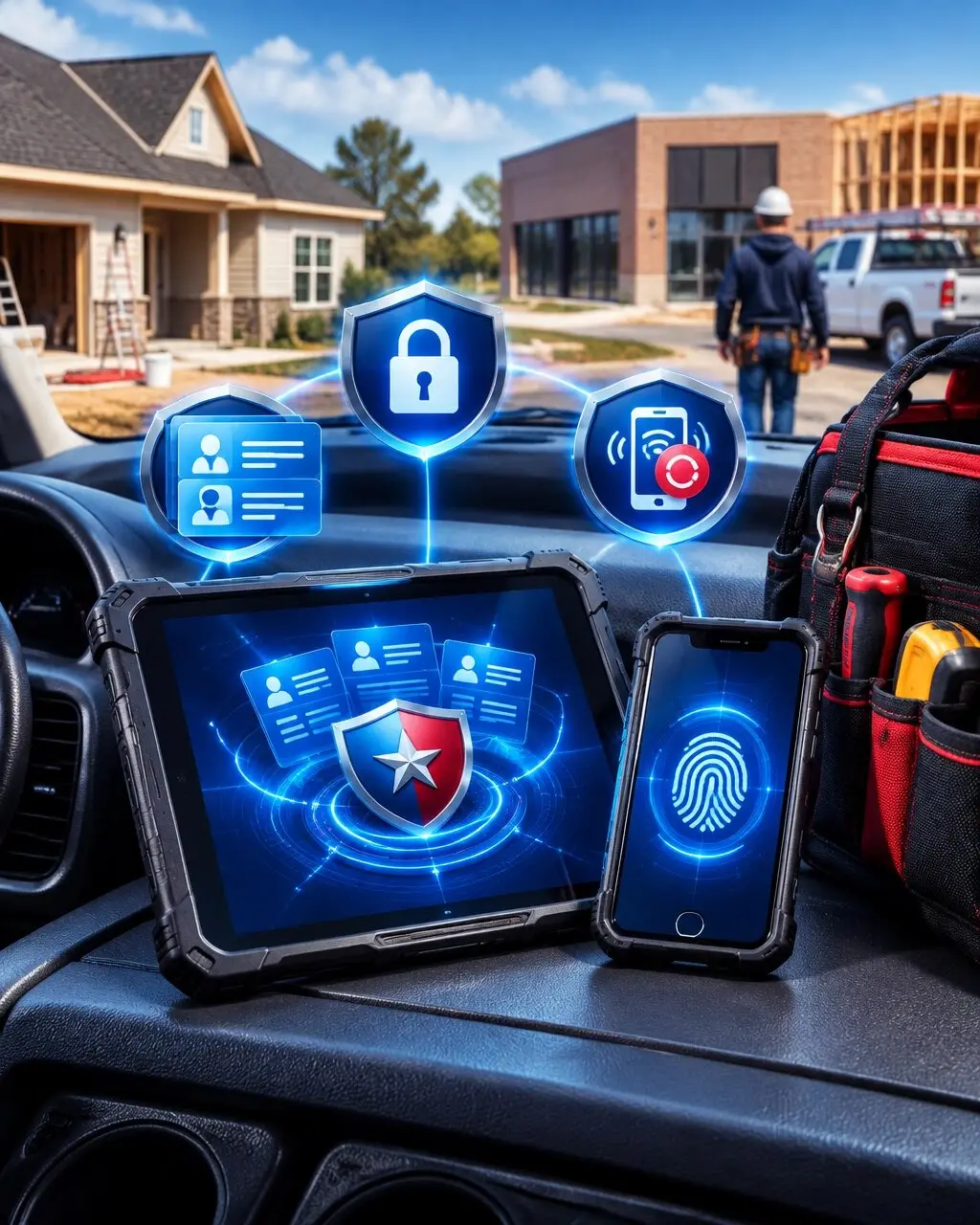
A lost unlocked phone, a shared login on a truck tablet, or a former employee's active account can create an avoidable opening.
A device on a job site should be treated like a power tool: assigned, secured, and removed from service when it is no longer under the right person's control.
5. Phishing and social engineering aimed at crews
A text may appear to come from a supplier, permitting office, general contractor, or business owner.
It may ask someone to click a link, open an attachment, buy gift cards, or send information quickly.
Crews are often busy and mobile. A five-minute security briefing can help employees recognize a suspicious request and report it before a small mistake becomes a business interruption.
6. Supply-chain and vendor exposure
Supplier portals, dealer portals, financing platforms, software providers, payment processors, and subcontractor systems may hold your data or connect to your business.
Your risk is influenced by the security of the vendors you depend on. Know who has access, what information they hold, and how access is removed when a relationship ends.
7. Insurance and contract requirements
Cyber insurance applications increasingly ask specific questions about MFA, backups, access controls, and incident response.
Commercial and government contracts may also require businesses to demonstrate particular safeguards.
Weak answers can affect pricing, coverage discussions, contractual eligibility, and a customer's willingness to work with you. No security provider can guarantee insurance coverage or contract acceptance, but organized records and sensible controls can help you respond more accurately.
The Basics That Stop Most of It
Think of these as basic tools of the trade. Put them on the Monday list:
- Turn on multi-factor authentication for email and every tool that touches money or customer data.
- Verify payment and bank-account changes by calling a known number already on file, never a number supplied in the email.
- Make backups and test a restore. Keep at least one copy separated from the network so ransomware cannot easily encrypt it.
- Use separate owner or administrator accounts and everyday user accounts. Give each person a unique login.
- Use a password manager so unique passwords are practical across the office and field team.
- Lock every phone and tablet with a PIN or biometric control. Enable remote wipe where available.
- Give crews a short briefing on fake invoices, supplier emails, suspicious texts, and how to report mistakes quickly without blame.
- Offboard employees the day they leave by disabling email, software, phone, remote access, and door or alarm codes.
- Identify vendors that touch customer, payment, or employee data. Review their security commitments.
- Write down the rules. Even a two-page policy covering payments, devices, accounts, and reporting is better than relying on memory.
The Federal Trade Commission's small-business cybersecurity guidance and NIST small-business resources provide additional practical direction.
Why It Matters
A cyber incident in a trade business is rarely just an IT problem.
It can look like missed jobs, unpaid invoices, idle crews, angry customers, delayed payroll, lost job history, and damage to the owner's reputation.
It can affect cash flow, business continuity, insurance discussions, contract requirements, customer trust, and the ability to sell or transition the business.
Think about a truck that is never serviced because it is always needed. It works until it breaks down on the way to the biggest job of the month. Cybersecurity is similar. Waiting until something fails can turn a manageable maintenance task into an operational crisis.
Technology protection is part of protecting EBITDA and your strategic goals. The objective is not to create paperwork for its own sake. The objective is to keep the business running, preserve customer confidence, and support the future you are building.
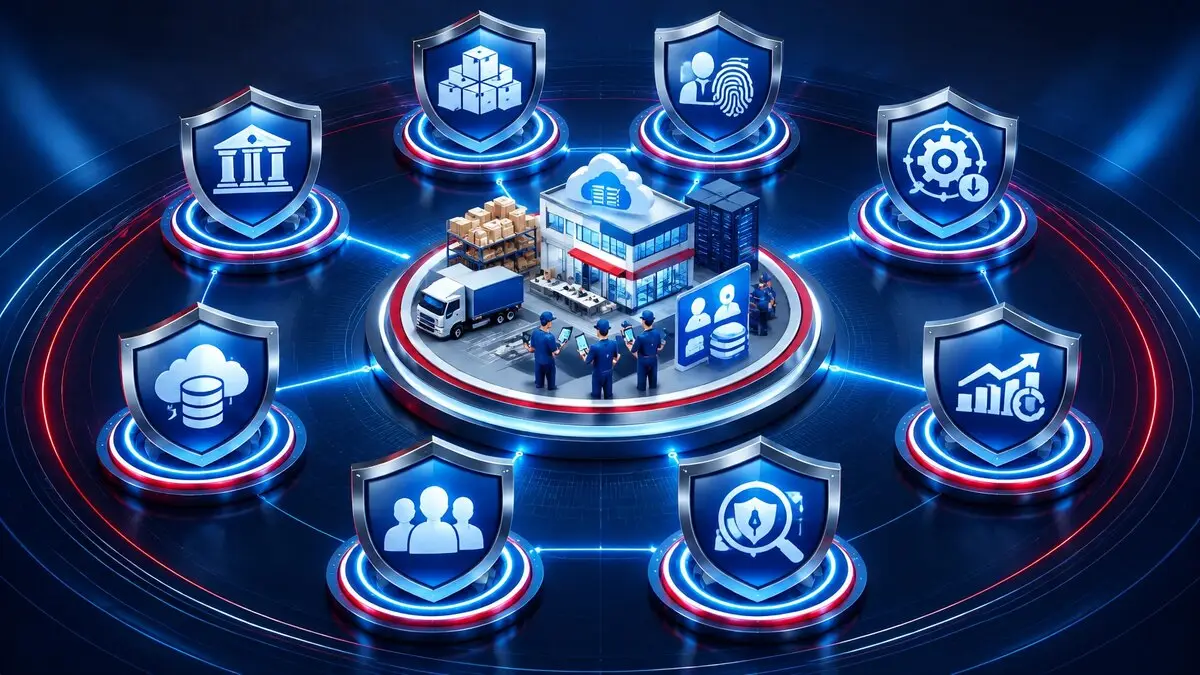
The 8 Layers of Protection for a Trade Business
A practical protection program should include eight connected layers:
- Governance and accountability: Decide who owns technology and security decisions.
- Know what you own: Track devices, software, accounts, vendors, and where business data lives.
- Identity and access: Use MFA, unique accounts, least-privilege access, and clean offboarding.
- Secure configuration and updates: Keep systems, routers, applications, and devices updated and properly configured.
- Backups and data resilience: Protect critical records and regularly test recovery.
- People and awareness: Train office staff and crews to recognize scams and report concerns.
- Detection and response: Monitor for suspicious activity and know what to do when something goes wrong.
- Validation and improvement: Test controls, review vendors, and improve based on lessons learned.
Like a job site, no single layer does everything. A locked gate helps, but it does not replace safe tools, trained workers, inspections, and a plan for an accident.
How We Deliver It
Proactive Risk helps trade businesses identify gaps, prioritize improvements, and reduce risk in practical terms:
- CyberAdvisor℠: Fractional CIO/CISO leadership when you need someone to own technology and security decisions but do not need a full-time hire.
- MeasureRISK℠: A structured look at current risk, gaps, and priorities.
- CATSCAN®: Independent testing that shows what an attacker could actually find.
- ManageIT℠: 24/7 monitoring and detection to help identify problems before they become extended outages.
- RISKWatch℠: Vendor and third-party risk management for the software, suppliers, and service providers you depend on.
- FraudShield™: Security awareness training built for real people, not just IT departments.
- CyberTrain℠: Tabletop exercises and incident rehearsal so a bad day does not automatically become a lost season.
- GOVERNAI℠: Governed AI adoption for businesses using or considering AI tools.
These services can help identify weaknesses and organize next steps. They do not guarantee compliance, certification, regulatory approval, insurance coverage, or incident prevention.
Join Us in Denville
Technology is now part of every trade business, whether you install it yourself or rely on outside providers.
Come talk with other local professionals about what is working, what is changing, and how to protect the business behind the work.
Join Proactive Risk at Trades Thursday – Local Event: Proactive Risk's Denville Trades Gathering:
Thursday, October 1, 2026
7:00 PM – 10:00 PM EDT
Diamond Spring Brewery
50 Broadway, Denville, NJ 07834
The event is free, in person, and limited spots are available. RSVP here.
You can also contact Proactive Risk at (973) 298-1160 to discuss a complimentary Executive Risk Review. This begins with a preliminary discussion and is not an audit, certification, or full assessment. Any paid follow-on work is scoped separately, and ongoing managed services are optional.
Summary / Takeaway
Trade professionals know the value of maintaining a truck, checking a tool, and verifying a job before it starts.
The same practical mindset belongs in technology.
Use MFA. Verify payment changes. Test backups. Control devices and accounts. Train crews. Review vendors. Write down the basics.
Those steps can help protect more than data. They can support operations, cash flow, customer trust, and the strategic goals that keep your business moving forward.
Proactive Risk
Intelligence-Led Cybersecurity & Risk Management
See Around Corners™
Secure the Future of Your Strategic Goals.
36 First Avenue, Suite 203, Denville, NJ 07834
(973) 298-1160
https://www.proactiverisk.com